I work with organisations, institutions, and universities to restore the bond between learning and living — foregrounding lived experience and real-world immersion.
"Where is your PhD in keeping alive?"— A goat herder, high in the Himalayas
The Human Way is a rooted path forward —
when extractive patterns no longer hold.
I accompany you through periods of re‑orientation —
toward regenerative ways of learning and living.
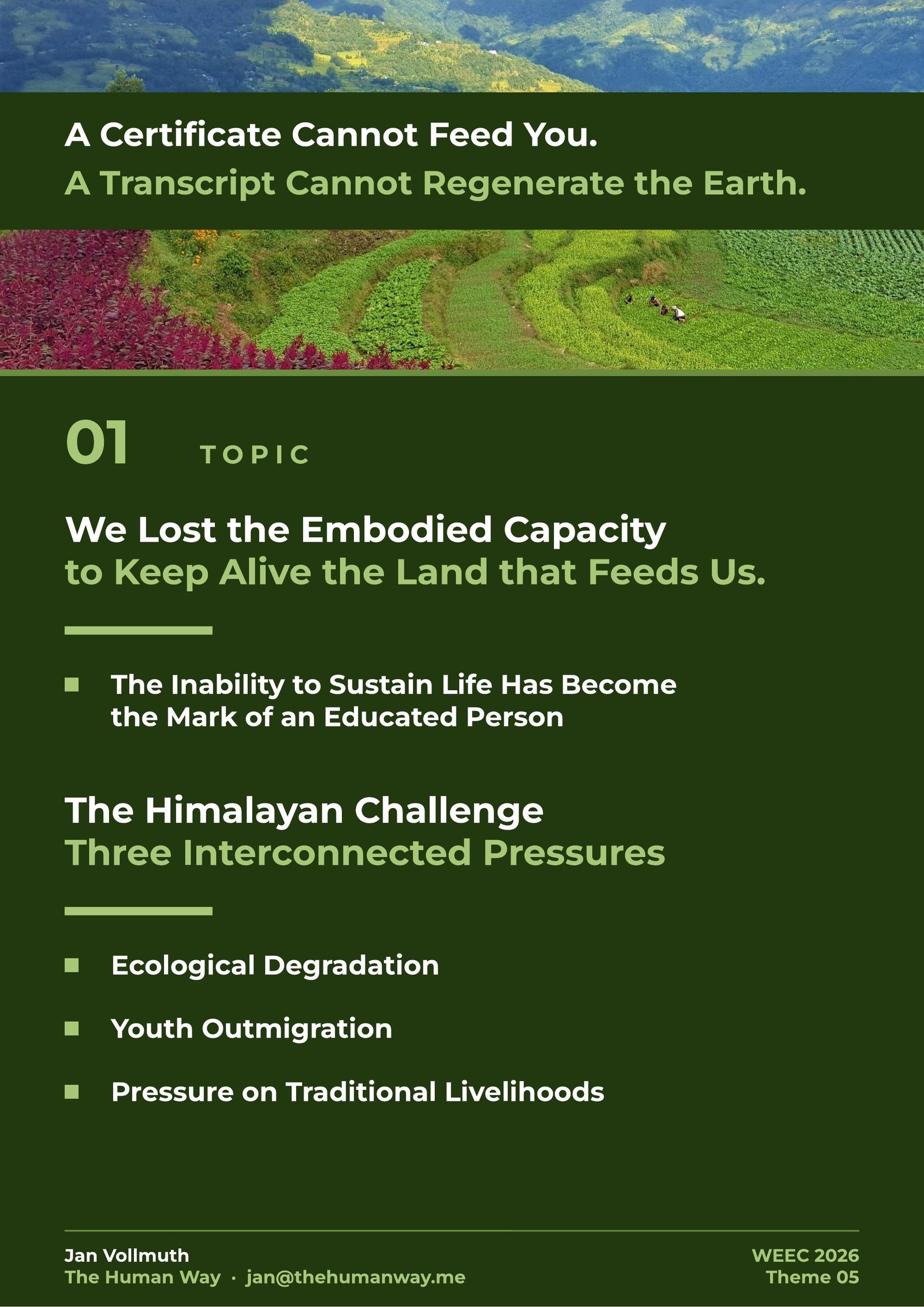
I began as an industrial engineer — optimising supply chains and managing business systems. Then a lockdown and months alongside shepherds and goat herders in the Himalayas — facing the hardships of pastoral life.
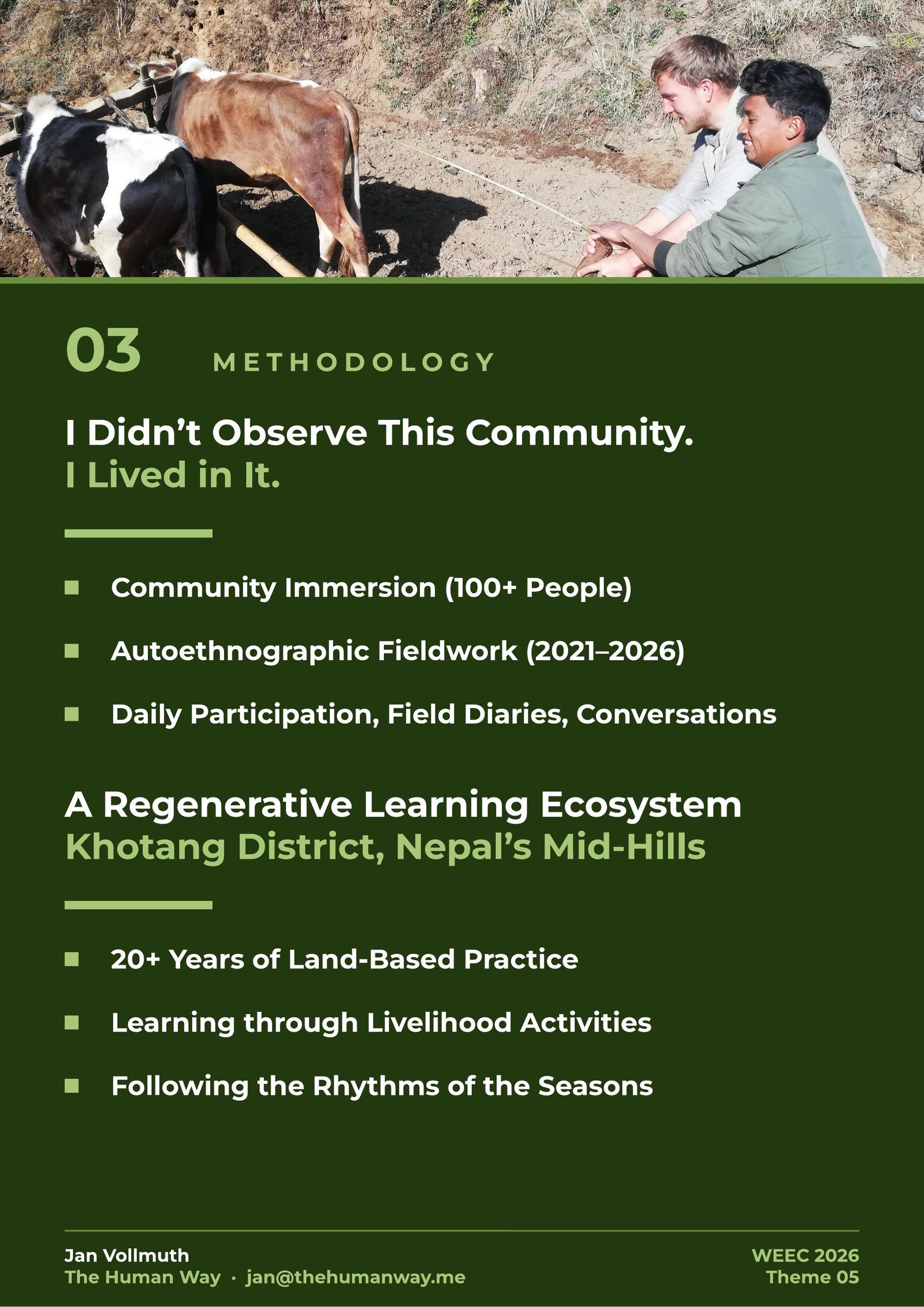
For years I was living inside communities that carry an inherited attention to the land, and the ability to sustain themselves from it. What began as a Master's in Outdoor and Experiential Learning became something the university couldn't confer — a PhD in Keeping Alive.
My research examines regenerative learning ecosystems across the Himalayas — with attention to how environment and community shape the capabilities individuals need to keep alive.
I chose to immerse myself in the field rather than inside classrooms and lecture halls. I help people do the same — through encounters that leave something behind.
Through my practice as an industrial engineer and lean specialist, I learned to read systems — to see what holds and what fails quietly. I bring that eye and that analytical capacity to this work.
IUCN Commission on Education and Communication (CEC) — Member
Asian Mountain Academic Alliance — Contributor
When the old approach no longer fits and a new one isn't clear yet — I walk alongside you through the turmoil. What I bring is not a method. It is a perspective drawn from the field — shaped by the challenges I faced and the experiences I gained. I don't arrive with answers. I think alongside — co-creating the questions worth asking and the directions worth exploring.
Courses, modules, and full program architecture — grounded in field evidence and brought in by someone who has lived what he teaches. For institutions who are embracing nature-based and experiential learning and who are ready to root education in land and community life.
I don't hand over a framework and leave. I co-design and co-build the structures, processes, and practices alongside the people who will hold it. The goal is to build what lasts — not dependency on an outside expert, but capacity that stays.
Most of us were educated for a world that measures success in credentials. This workshop makes the gap visible — between what modern education prepared us for, and what life actually demands. Participants leave with a different question: not what did you score? But what are you capable of keeping alive?
Full day · Residential · Intensive week
We inherited a worldview we never chose — about progress, development, and what it means to be educated. Absorbed so thoroughly we stopped noticing it was there. This workshop creates space to name these patterns, examine them, and put down what no longer serves. Participants leave lighter. And with more clarity.
Full day · Residential · Intensive week
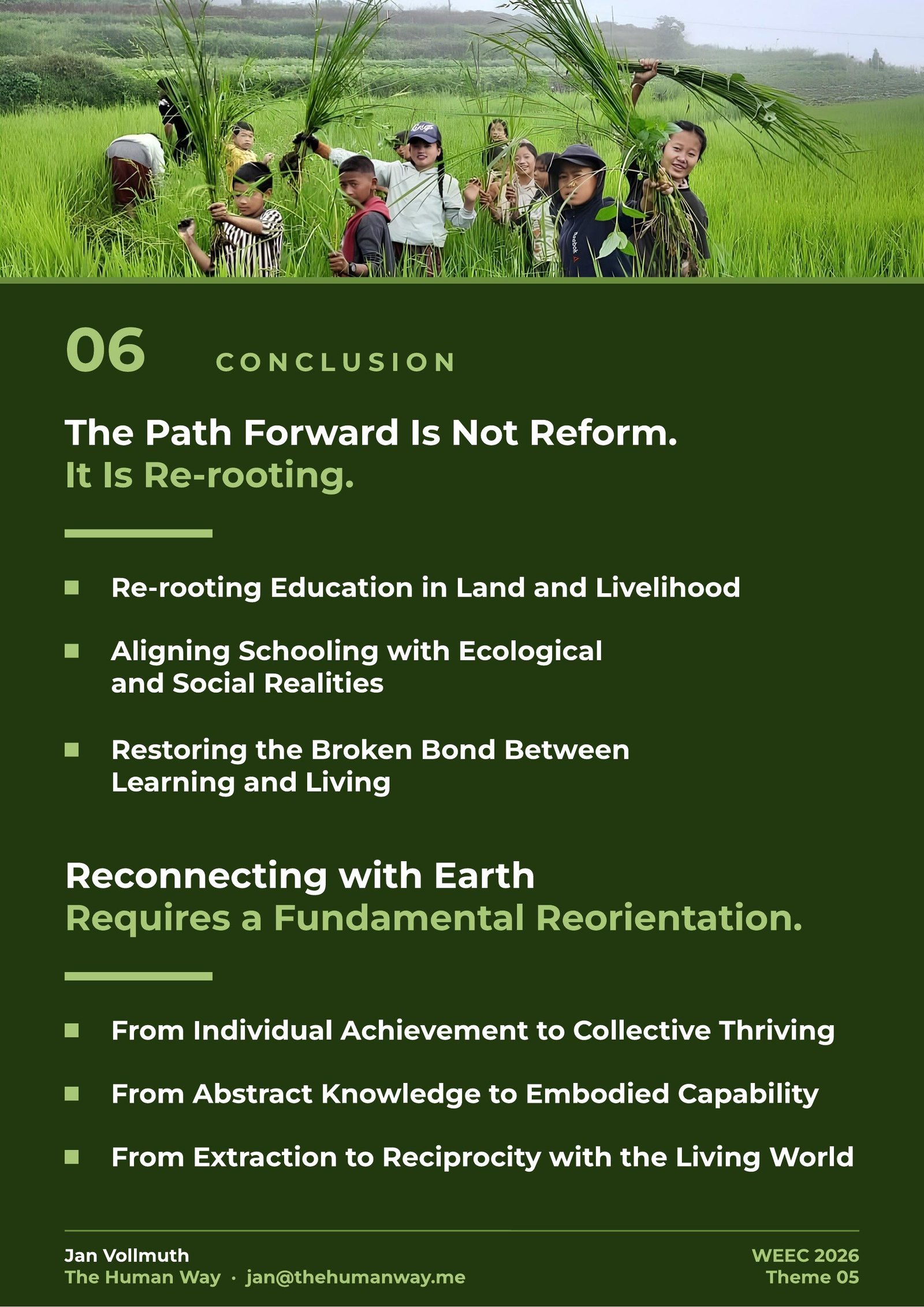
Most of us no longer have roots. This workshop is an invitation to step onto a different path — one where land is not backdrop but centre. Where learning and living are inseparable. Where reciprocity, not extraction, is the guiding principle. And where collectivism, not individualism, is the central pillar.
Full day · Residential · Intensive week
A few days in land-based communities. This is not a tour. It is an immersive encounter. The experience challenges inherited assumptions, expands perspective, and cultivates the practical and relational capacities needed to navigate real-world complexity. Participants will engage in grassroots community initiatives, gain hands-on experience, and shape regenerative futures from the ground. Designed for cohorts, mixed teams, and institutions. Facilitated by trusted local partners.
A few days immersed in Himalayan pastoral life. Walking on pastoral routes that lead to magnificent alpine pastures — where goat, sheep, Chauri or yaks are grazing. Participants will follow the rhythms of the herders who carry an inherited attention to the land. This is not comfortable. It is not designed to be. You will not come back unchanged. Open to individuals or groups. Guided by people who call the mountains their home.
What becomes possible when education is rooted in land, livelihood, and community life?
Immersive field research across Himalayan communities in Nepal and Northern India.
Autoethnographic inquiry combining prolonged participation, observation, reflection, and dialogue with community members.
Survival literacy
Experiential learning
Nature-based education
Learning ecosystems
Kinship pedagogy
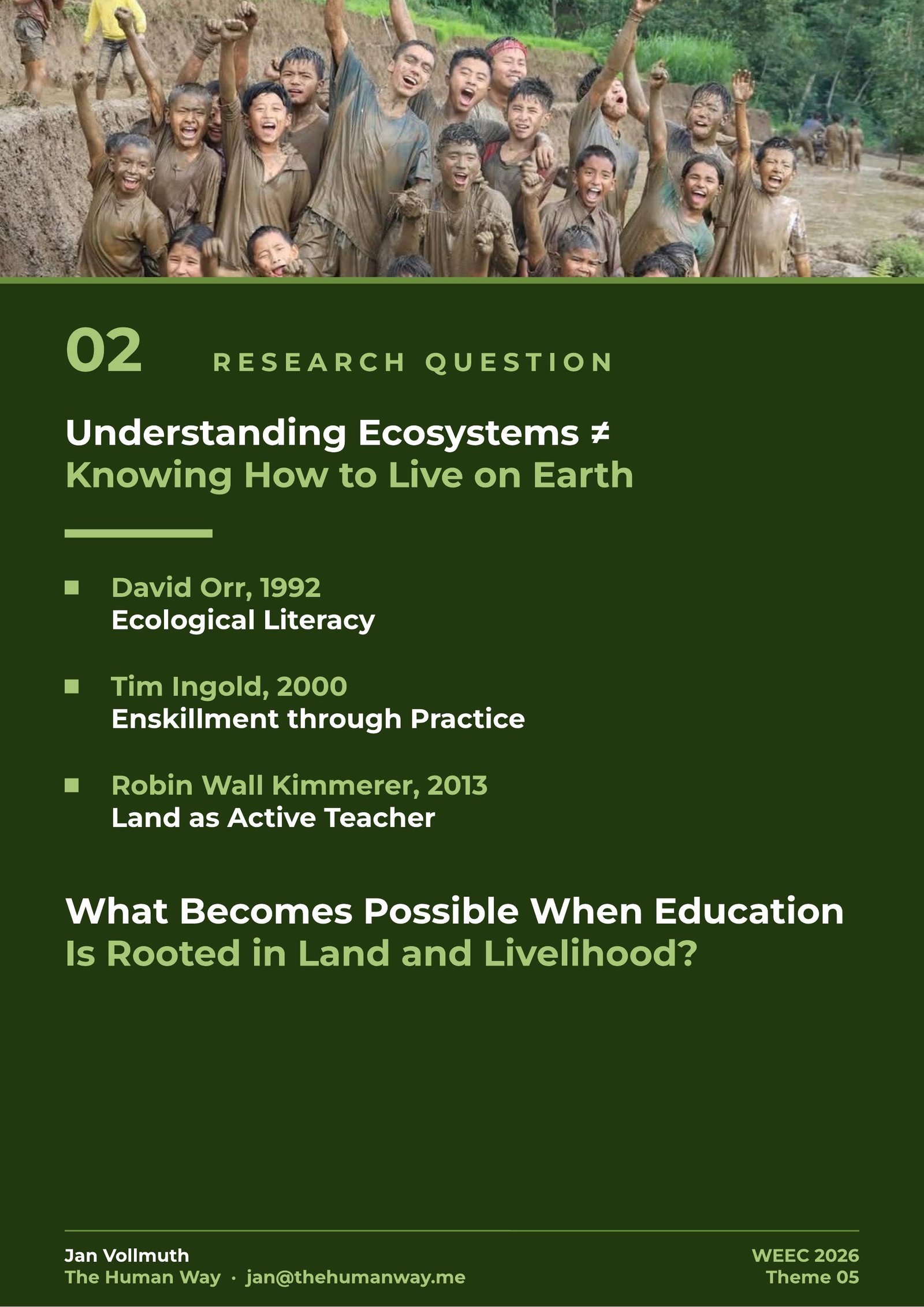
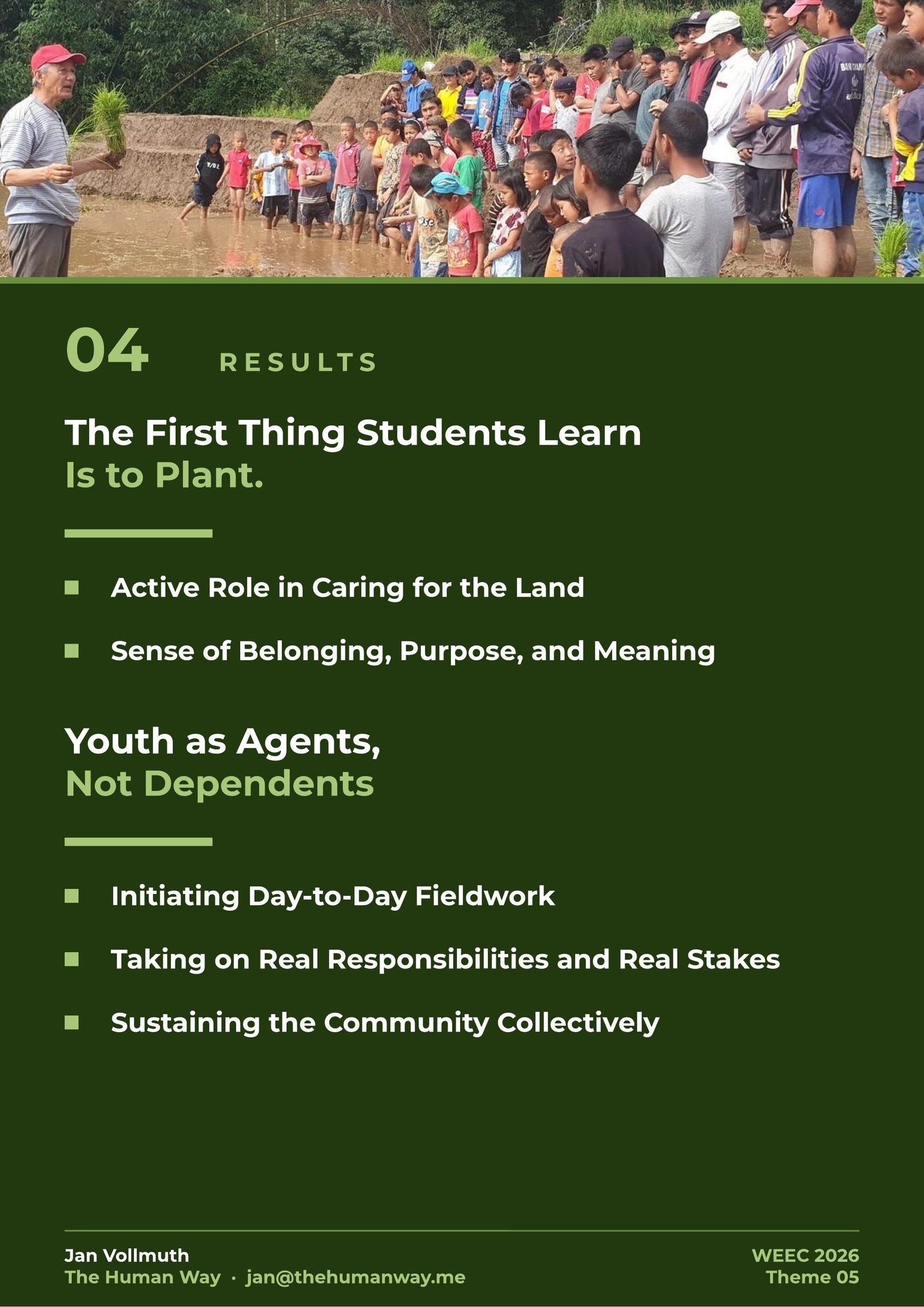
At the center of my research stands a community-based learning ecosystem in Nepal’s mid-hills — where I spent years, deeply immersed in the day-to-day. What I found there became the foundation this work is built on.
This is not a case study observed from the outside — it is evidence gathered from the inside. I translate that field engagement into practical frameworks for learning ecosystem design, community development, and regenerative practice.
What this research ultimately produced is not only a body of evidence. It produced a provocation — the PhD in Keeping Alive. This is not an academic degree, but a lifelong relearning of how to keep alive.
Education rooted in land and livelihood: What mountain universities can learn from The Human School in Nepal’s Mid-Hills
Springer Nature SDG Series — Coming soon
From Engineer to Earth Tender: An Autoethnography of Unlearning
MA Thesis, University of Cumbria (UK)
We domesticated children in the name of education.
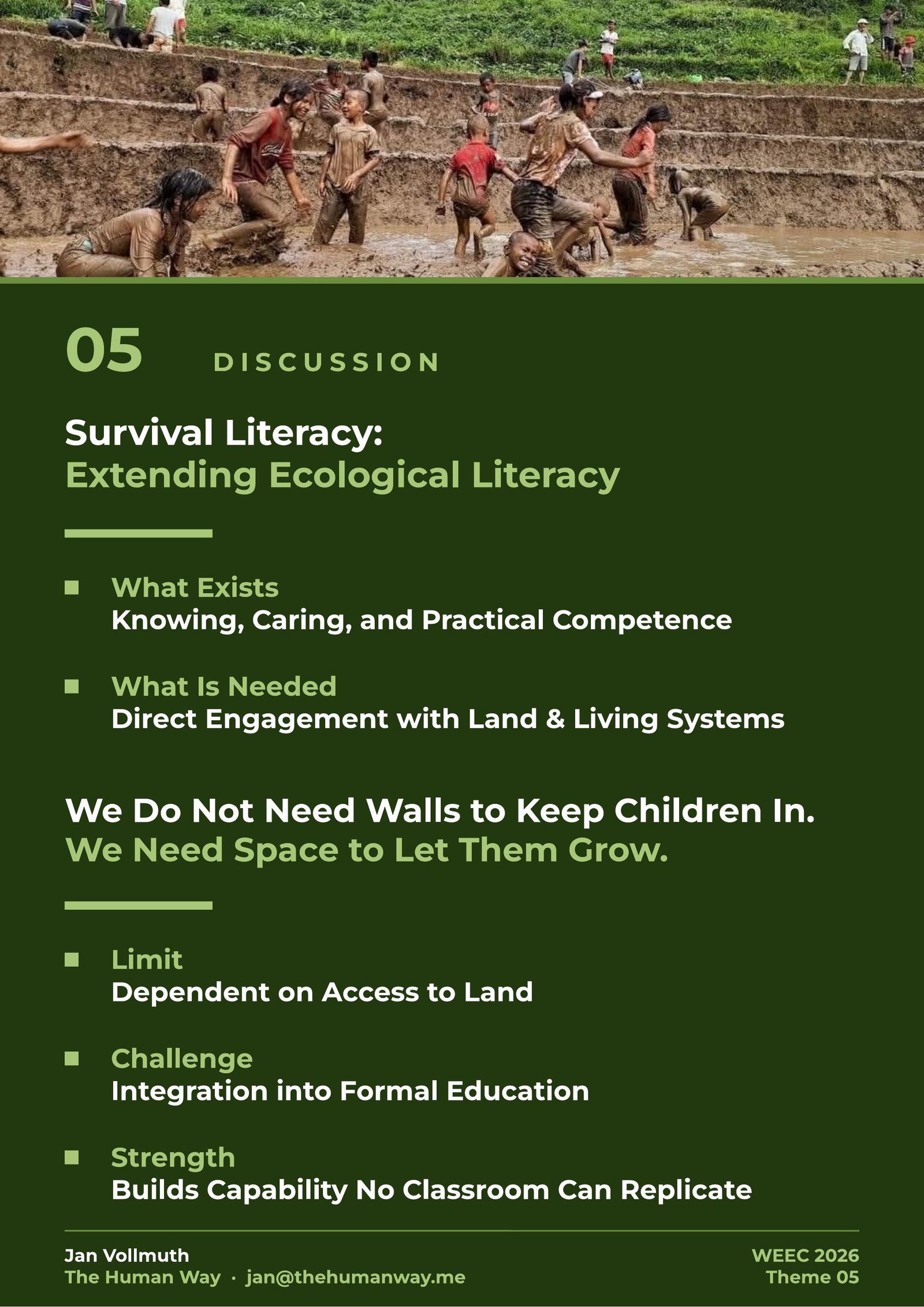
We took them out of fields, forests, kitchens, and workshops — and placed them in rows inside four walls. Stillness became obedience. Curiosity became distraction. Compliance became success.
Drawing on years of immersive fieldwork across the Himalayan region, this booklet explores what we left behind in the name of development — and what it takes to reclaim it. It offers no model to copy. It is an invitation to reimagine the ways we live, learn, and raise the next generation — together.
The question is no longer: What are your credentials?
It is: What are you capable of keeping alive?
This is a remarkable and important treatise for anyone engaged in the ‘reimagining education’ movement. What is school for? What have we lost in domesticating our children, and what can we gain in reconsidering belonging, community, and ecological resilience as keystones of our existence?
— Reader, The PhD in Keeping Alive
Your work is an urgent call to overhaul the current system — and it feels like a lived, embodied answer to the questions Illich posed decades ago. What moves me most is that you are offering not just critique, but proof of life.
— Reader, The PhD in Keeping Alive
The emphasis on learning through relationships, responsibility, place and real life strongly connects with my work in nature-based learning and teacher development. The book is most powerful not as a blueprint for removing classrooms or examinations, but as a challenge to make education more participatory, purposeful and connected to life.
— Reader, The PhD in Keeping Alive
I had a conversation with Jan Vollmuth after seeing his post about ‘Keeping Alive’ and the themes of experiential learning, place-based learning and learning through participation in living systems. I keep coming back to this thought: learning and living should not feel like two separate things. The more connected learning is to life, the more powerful it becomes.
— Education Partnership Manager, RSPB — The Royal Society for the Protection of Birds
If something in this work speaks to your situation — write to me.
The conversation is free. I'll tell you honestly whether I can help.